
On June 12th, four out of five San Francisco Giants pitchers, including starting pitcher Landen Roupp, inscribed the Biblical verse Genesis 9:13 on their rainbow-colored caps. The verse reads “I have set my rainbow in the clouds, and it will be the sign of the covenant between me and the earth.” Aside from being against Major League Baseball’s policy against defacing a uniform and eliciting an official warning from MLB’s offices, this constituted a rejection of the LGBTQ+ acceptance symbolized by Pride Night.
In some respects, baseball is a microcosm of American society. A classic sport in American culture as well as in much of East Asia and the Caribbean, the game of baseball is something that is immensely influential in the minds of many. Major League Baseball teams can reasonably expect about 1 to 3 million attendees per year, and even more people watch on television or listen on the radio. This audience is a wonderful way to connect with people and is also a form of mass media through which ideas can be communicated.
Only four players who played in Major League Baseball have ever been publicly out as LGBTQ+, Glenn Burke, Billy Bean (not to be confused with the subject of the movie Moneyball, Billy Beane), David Denson and Kieran Lovegrove, the latter two of whom only played in the minor leagues. Only Denson and Lovegrove are still alive, as Glenn Burke died from AIDS in an era before effective treatment and Billy Bean passed away in 2024 after being an advocate for LGBT+ rights and inclusion in baseball.
In the absence of queer players, Pride Night represents the only real way that baseball signals an appreciation of LGBTQ+ players and fans. The first Pride Night was held by the Los Angeles Dodgers in 2000. This was the first event explicitly celebrating the LGBTQ+ community in any American professional sport, and was controversial at the time, so much so that the second Dodgers Pride Night was in 2013. Since then, every MLB team has hosted a Pride Night except the Texas Rangers, albeit some under variant names or with different presentations.
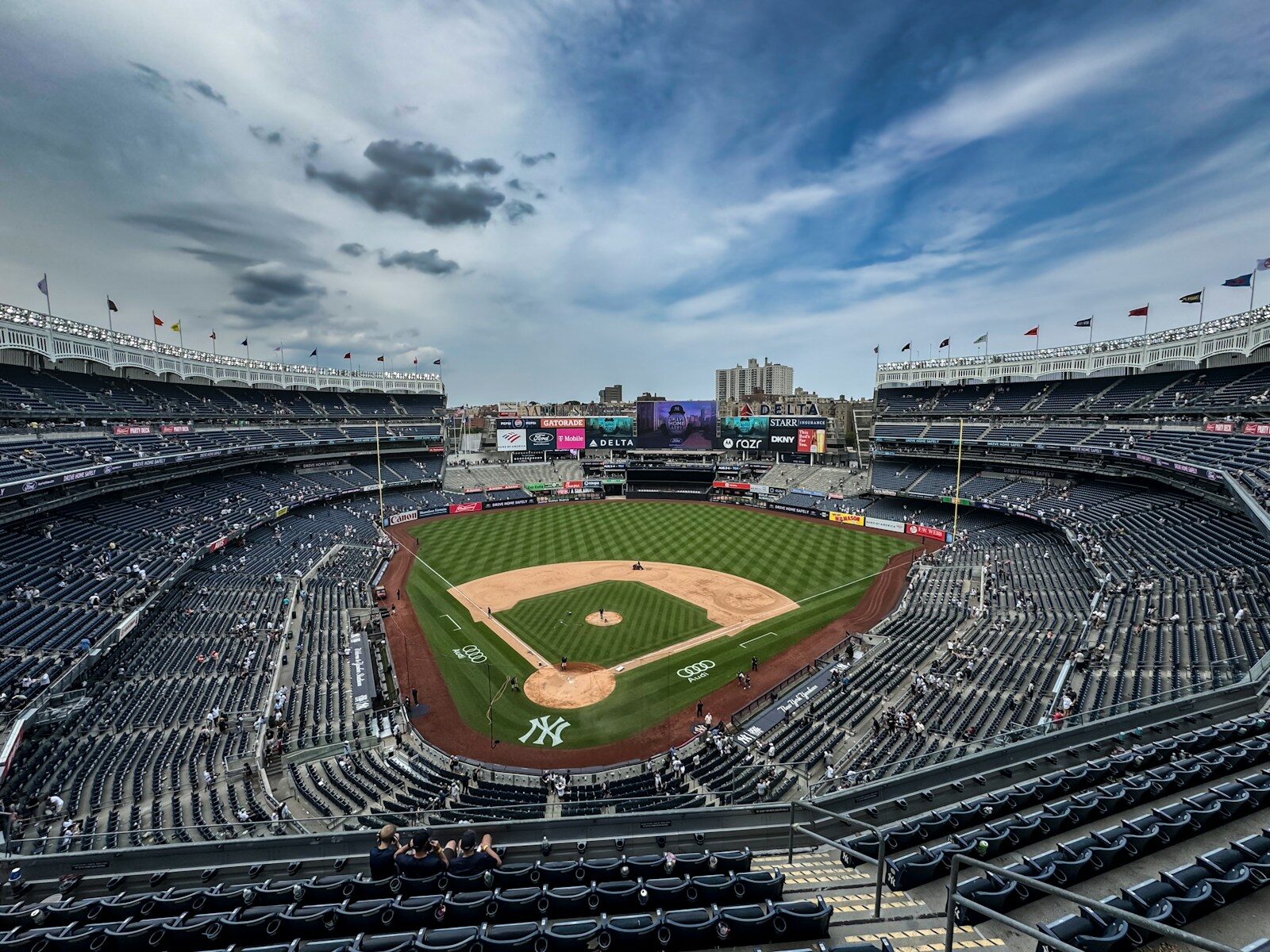
What does Pride Night look like in 2026? Assigned Media attended Pride Night for the New York Yankees to find out.
The New York Yankees were the last Major League Baseball organization save for the Texas Rangers to hold a Pride Night, and the New York Yankees Pride Night on June 17th was much more subdued than many other affairs. It was scarcely mentioned in official press releases, and even Yankees employees in guest services did not know if it was Pride Night or not. The only national outlet that even mentioned the date of Yankees Pride Night is Out Sports.
On Yankees Legacy of Pride Night, an announcement was made to attendees before the first pitch that it was Legacy of Pride Night, and a scholarship of $10,000 was made available to five Yankees fans from across all five boroughs. Beyond that, the only festivity was a rainbow-colored Yankees cap that was only available via the official MLB app.
Still, for Lucianna Lombardi, the Staten Island recipient of the 2025 Yankees-Stonewall Scholarship, even a subdued Pride night is a valuable show of support. Lombardi is currently studying psychology at SUNY New Paltz, uses she/her pronouns, and identifies as a lesbian. “The money was tremendously helpful my first year, and was primarily split between tuition and housing”, Lombardi noted, “My tuition per semester was about $7,000, and my housing prices were $22,000 in total. The Yankees-Stonewall Scholarship and another scholarship from SUNY New Paltz itself covered that.”
According to Lucianna Lombardi, she received six tickets plus her own to an executive suite with an estimated cost of around $25,000 per game in addition to the money. She had the chance to meet Yankees general manager Brian Cashman and visit his office along with her father. “[Cashman] was very charismatic and personable. It was one of the greatest and most unique experiences of my life,” Lombardi explained, “I will probably never be able to do something like that again.”
The New York Yankees choosing to commemorate the Stonewall riots is a powerful statement of allyship with the queer community, as said by this year’s recipient of the Legacy of Pride scholarship from Staten Island, Manny Torres. He identifies as aromantic and asexual, wearing a Pride pin to the stadium on his jersey and he and his friends described their favorite players as Jazz Chisholm, Ben Rice and Anthony Volpe.
When asked about the Stonewall Inn, Torres explained “The Stonewall riots were this retaking of a place in the world. The symbol of Stonewall is a symbol of belonging in the world, in not only the United States but other countries such as the UK as well.” Lombardi echoed a similar sentiment, noting “Stonewall was this tremendous turning point in history, and we have to remember the legacy of Stonewall. If we don’t, the history of oppression will repeat itself.”
The lesson this experience seems to elicit is that although the general perception of baseball fans is that of conservative white men, the truth in New York is different in the modern era. The vast majority of those at Yankee Stadium who agreed to speak with Assigned Media either were ambivalent towards Pride Night or were happy it was happening. Pete and Lisa, a couple from Orlando, Florida in their 60s who love the Yankees and Lou Gehrig, noted “We didn’t know it was Pride Night, but it’s good that it’s available. [Lisa] even wore a rainbow shirt by accident.”
Adi Kung is a journalist, writer and poet. She currently resides in New York.


I happen to be a Cubs fan, and on I was on Harry Caray’s 10th Inning show,in 1985 and he introduced me as JOHN Q. PUBLIC,THE FAN1 and couple years later he tabed me as the #1 Cubs fan! in 1987 on live TV. And when several MLB player made anti gay remarks, just like last week and I called the Chicago Sun-Times and outted myself and Jay Maiotti wrote a feature on it. I have been fighting for Human and Gay Rights for over 50 years… and it’s time… We all live together in harmony in baseball and the USA! P.S. I’m 89!