When it comes to issuing legally dubious rulings that harm transgender people, the Supreme Court is showing itself to be full of MVPs. After widely decried opinions in youth medicine and access to accurate passports, the SCOTUS now turns its all-star talent to trans participation in sports.
In issuing its decision in the case West Virginia v. B.P.J.—commonly known as the “trans athletes case”—the Supreme Court once again made its animus against trans people clear. Beyond referring to trans women as “biological males who identify as female” throughout, the Court also wrung out many tears for the poor “biological females” who would be terrorized by a theoretical hoard of trans women athletes.
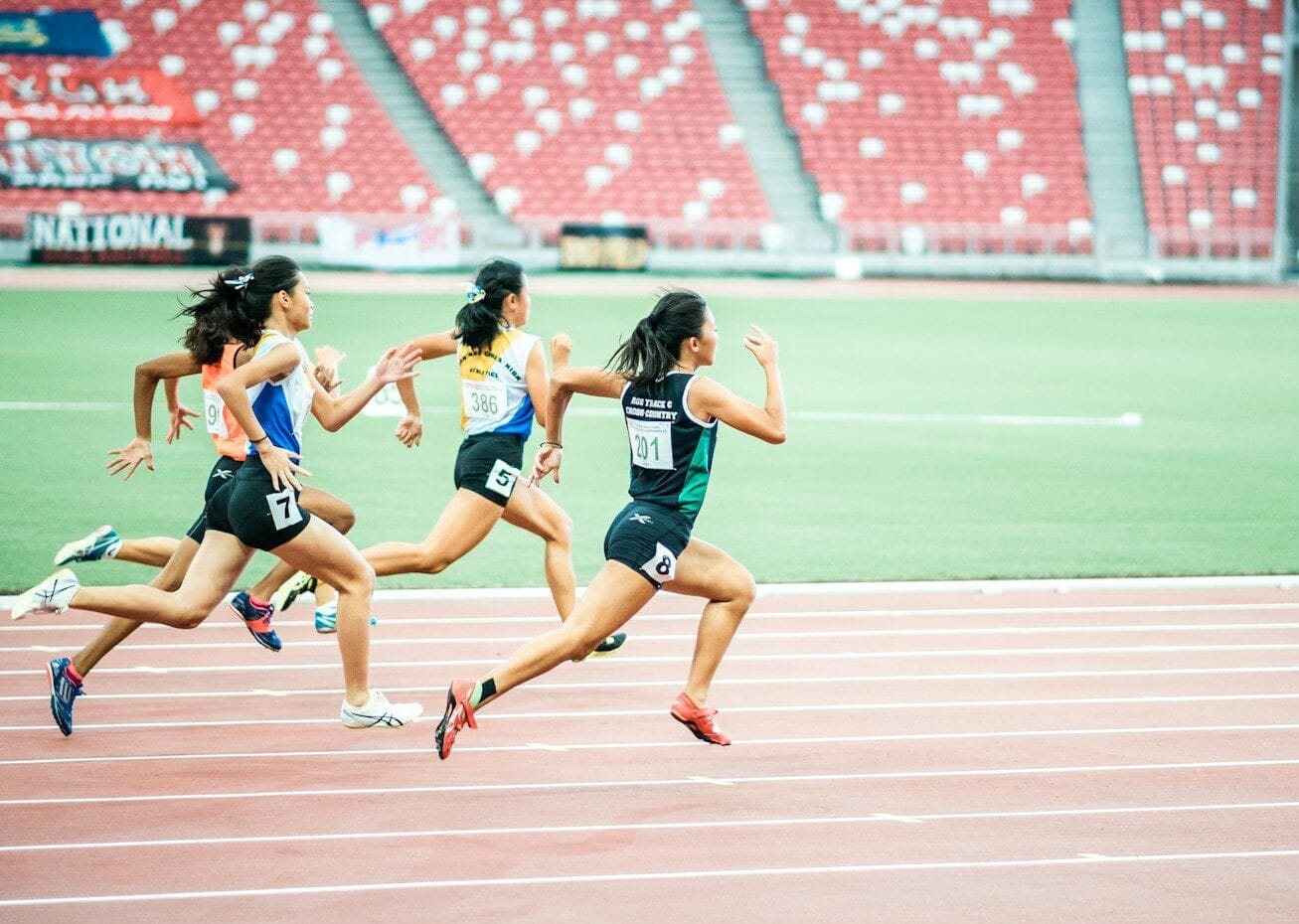
In this case, the one meting out terror to the cis girls was 12-year-old Becky Pepper-Jackson, a trans girl who had in fact never undergone male puberty. She was stripped of her ability to participate in sports by a 2021 law passed by the State of West Virginia—however, in 2024 an appellate court agreed that the law barring her participation was unconstitutional.
Enter the Supreme Court, which reversed that ruling and told Pepper-Jackson she could not play. For all the sympathy it showed to cis female athletes, the Court offered no concern whatsoever for the harms done to trans women who would be left in the cold by its ruling. Writing about defendant Pepper-Jackson, who had been happily participating in track and field for years before West Virginia stopped her from doing so, Justice Kavanaugh wrote,
It is an unhappy occasion whenever a student who wants to play school sports cannot do so. We appreciate the desire of every student, including B. P. J., who wants to play school sports. And we recognize that student-athletes are understandably disappointed and upset when they do not make a team or otherwise cannot participate.
In effectively telling trans people “we’re sorry that you feel that way,” the Supreme Court majority showed little interest in exploring just what ill effects would be done to trans people who were prevented from participating in sports by its ruling. However, researcher Alex Siu Wing Chan and colleagues did the legwork for them—Chan’s recent research paper shows just how substantial are the harms of excluding trans people from sports.
Chan and colleagues performed an analysis of 12 papers, finding that trans exclusion in sports can have serious impacts to mental health and suicidality. They write, “transgender athletes [face] social discrimination and inequality in sports participation, resulting in mental health problems and higher rates of suicide.”
One paper cited in Chan’s research should be read in depth for the look it provides into trans individuals’ experiences when simply attempting to participate in sports. One trans woman named Sandra shared her experience of being forced to use changing rooms with boys and participate in sports with them during school athletics, saying, “it felt like going to a concentration camp when I had to do PE.”
Another trans woman, Danielle, spoke to the pain and humiliation of being forced to stop attending her ballet class—an activity she had participated in for 14 years—after opting to transition:
I’ve thought about it so much over the last few weeks, talked to all my friends and people who are interested in ballet on social media, asking what should I do? And people are saying, “Go for it. If people can’t handle you, that’s their problem.” But they’re not me. They’re not the ones standing there when someone saying, “Sorry I’m going to have to ask you to leave the class.” They’re not the one suffering the humiliation of one or two people in the class saying, “We’re not happy with that person.” And even though they might be the one that’s being bigoted, if a teacher thinks they are going to lose several people from the class as opposed to one [they will likely ask me to leave].
Imagine the pain and humiliation of being forced to leave your athletic pursuit not by a bigoted classmate but by the highest court in the entire United States.
As the authors explain, the result of the sort of humiliation and exclusion meted out to individuals like Sandra, Danielle, and Pepper-Jackson is poorer physical and mental health.
Respondents described a type of vicious circle they faced, through having to cope with the psychological stress of gender transition; being forced to withdraw from sport/exercise during the transition process; suffering lower levels of fitness; and so experiencing increased levels of stress. Their exclusion from sport also had negative social and psychological costs in terms of socializing and forming relationships.
Another paper that Chan reviewed showed that LGBT individuals experience disparities in physical activity from adolescence on, correlating with increased obesity as compared to their cis-het counterparts, with serious consequences for physical health. As the authors of the paper wrote,
These disparities are serious issues because physical activity, including sports involvement, is an important factor in mitigating several health risks that sexual minority youths experience. Physical activity, including sports involvement, for many adolescents is facilitated through school or community activities. Sexual minority adolescents might be less likely to be physically active or to be involved in team sports because of potential stigma and victimization that they often experience at heightened levels in these specific contexts
It should be noted here that a recent systematic review of 52 separate papers showed that trans women who undergo hormone replacement therapy possess no athletic advantage over their cis counterparts. It should also be noted that Pepper-Jackson transitioned before she ever experienced any of the effects of testosterone.
It’s too bad the trans people face such high levels of exclusion in athletic environments, because one paper reviewed by Chan and colleagues found that athletics are often an integral part of a trans person’s journey to feeling safe and proud in one’s own body—but only if trans people are fortunate enough to be able to participate safely. It was just that sense of inclusion and body positivity that Pepper-Jackson felt until protests and hate speech began to follow her from track meet to track meet. As reported in the Associated Press,
In 2024, five athletes from a rival school refused to compete alongside Pepper-Jackson. The five received a standing ovation at a news conference a week later in Charleston, where [Republican governor Patrick] Morrisey, then as the state’s attorney general, announced the state would challenge a federal appeals court ruling favoring Pepper-Jackson.
At the 2025 state meet, a female sprinter stood victorious on the podium wearing a T-shirt that read, “Men don’t belong in women’s sports.”
The papers covered in Chan’s study give some idea of the horrors that Papper-Jackson must have experienced in the years when her simple desire to play sports made her the subject of ridicule and hate speech by some of the most powerful people in the country. Yet, for all their loud pronouncements on the dangers of “biological men” playing against real women, the six justices who forbid her to continue playing sports are silent as to the clear harms that she has endured.
Sports and other athletic pursuits are widely enjoyed by Americans—a Pew study found that roughly half of Americans participate in high school and collegiate sports. Beyond being a way to simply remain healthy, for many athletics are a crucial part of identity and a cornerstone of building a healthy community.
But it seems that, as is happening in more and more parts of American society, trans people are being told that we’re simply not wanted. A more just society, which viewed trans people as worthy of dignity and happiness and which cared about our health, would be undertaking vast efforts to help us participate more fully in sports, instead of using it as a wedge issue in a campaign to strip us of more and more rights. With Democrats notably wobbly on this issue, it seems that it will be a long time before trans people can equally enjoy the benefits of sports participation.
Veronica Esposito (she/her) is a writer and therapist based in the Bay Area. She writes regularly for The Guardian, Xtra Magazine, and KQED, the NPR member station for Northern California, on the arts, mental health, and LGBTQ+ issues.