
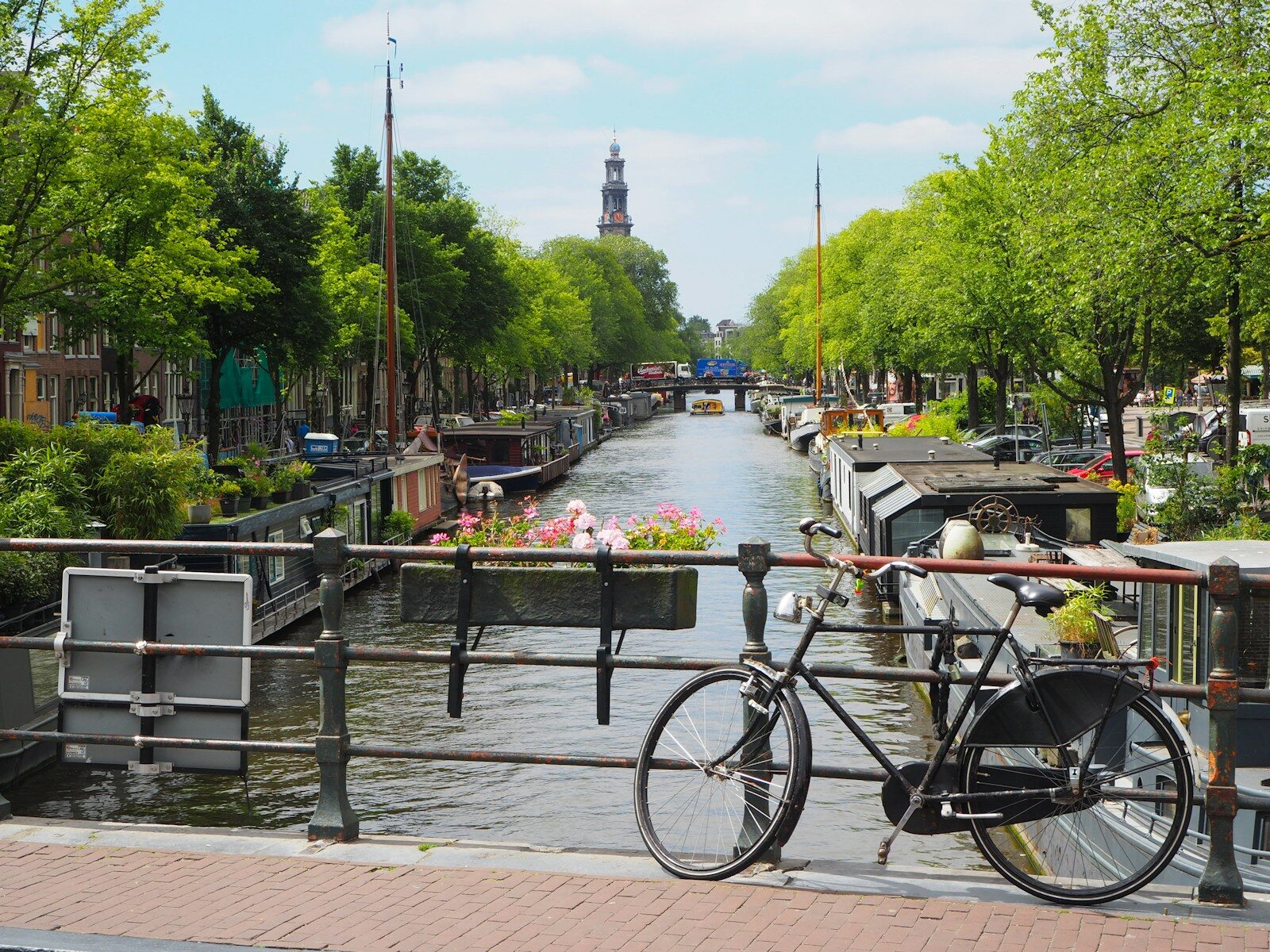
As the U. S. slides backwards on LGBTQ rights, the Netherlands has banned conversion therapy – for both sexual orientation and gender identity.
Dutch legislators voted on Tuesday, June 16, to outlaw conversion therapy, the latest country to regulate the practice after Brussels failed to implement an EU-wide ban earlier this year.
“You are not sick. You are not wrong. You do not need to be changed,” legislator Wieke Paulusma said after the 57-15 vote, calling the move a “historic” victory for the LGBTQ+ community.
The move makes the Netherlands the ninth country in Europe to ban attempts to change a person’s sexual orientation or their gender identity.
Campaigners behind a European Citizens’ Initiative, which lets voters petition Brussels directly, got 1.2 million signatures on a petition to ban conversion practices targeting the LGBTQ+ community earlier this year.
In May, the European Commission, the EU’s executive body, only adopted a recommendation to call on countries to ban the practice, not a full-fledged ban.
“While it is appreciated that the European Commission condemns and calls for a ban on these practices, this falls short of the urgency required,” Mattéo Garguilo, the 22-year old activist who along with several friends launched the campaign, said after Brussels announced its decision.
The Netherlands has now joined Malta, Germany, France, Greece, Spain, Belgium, Cyprus, and Portugal in forbidding healthcare workers and counselors from encouraging adults and children to change their sexual orientation or gender identity.
Research by the EU’s Fundamental Rights Agency found that nearly a quarter of LGBTIQ+ people across the 27-member bloc had been subjected to some form of conversion therapy in their lifetimes.
Paulusma’s center-left D66 party, along with five others, first introduced a bill to outlaw conversion therapy in 2022, but the legislation hit a number of political and legal roadblocks. The Dutch Council of State, which must weigh in on the legal consequences of proposed legislation, advised against the bill, saying it ran contrary to freedom of religion.
Rob Jetten, then a D66 parliament member, called conversion therapy “cruel, traumatic, and completely unnecessary” when the bill was submitted. Now Jetten is the country’s first openly gay prime minister.
The Dutch lower house passed an amended bill in 2025, which focused on prolonged and systematic treatments.
According to COC, an LGBTQ+ advocacy group in the Netherlands, there are at least fifteen providers of conversion therapy practices in the country, which include everything from workshops to exorcisms.
The group has been pushing for a national ban for fifteen years. “Finally clarity: ‘cure’ is a myth, you are good as you are, and attempts at ‘cure’ are prohibited and punishable,” COC’s chairperson Myrtille Danse said following the vote.
Some practices, like shock treatment and certain medications for conversion therapy, had already been outlawed. In 2012, the Netherlands stopped requiring health care companies to reimburse for conversion therapy practices.
Practitioners who continue in spite of the new law face 27,500 euros ($32,000) and a prison sentence of up to two years. They can also have their professional licenses revoked.
Critics say that in practice, the law will be difficult to apply. Peter Schalk of the conservative Christian SGP party argued that the bill did not clearly define the line between a therapy practice and someone offering advice. “The boundary of oppressiveness” is not clear,” he said during a debate over the bill.
In an interview ahead of the vote, Schalk complained in particular about the ban on gender identity conversion. “A 16-year-old is allowed to choose to go in a different direction by using puberty blockers, hormone blockers, and so on. But you are not allowed to say at the same age: I want to go the other way,” he said.
LGBTQ+ activist Jacques Zonne told regional news broadcaster Omroep Gelderland that his “dream has turned into law.”
Zonne has been fighting against conversion therapy for decades, after he was subjected to the practice beginning in the 1970s. He grew up in a conservative Christian family in an area of the Netherlands known as the Bible Belt, a north to south strip with a high concentration of conservative orthodox Reformed Protestants.
In a 2012 documentary about his experience, he describes having his passport taken away and having his every move surveilled after he entered a conversion center. The now 74-year old eventually escaped, moved to Amsterdam and began speaking out about what happened to him.
Zonne said his work is not yet done and that he intends to pick up his advocacy at the EU level again when campaigners will make another attempt to pass legislation later this year.
Molly Quell is a Dutch-American journalist based in The Hague, Netherlands. She was previously with the Associated Press and her work has appeared in the Guardian, the Economist, and Mother Jones.





Can I as a Dutch person mention that calling D66 a center-left party is something I consider inaccurate? They have been caving HARD to the pro-fascist VVD (Citizens party for Freedom and Democracy) and extreme-right/or
increasingly hard-right CDA (Christian Democratic Appeal) who very much desired a massive budget cut to mental healthcare.
This comes after D66 promised in their 2025 election campaign program to combat the long waiting times for transgender people seeking healthcare, but now giving them a massive middle finger.
In the coalition agreement, Rob Jetten, who showed up at an anti-genocide protest in 2025, didn’t mention a single word about the genocide in Palestine, instead, caving, once again hard to the pro-Israël VVD and CDA (there are serious suspicions that the VVD is paid by a Dutch version of AIPAC, in this case called CIDI (Centrum Informatie en Documentatie Israël which is exceptionally racist and pro-genocide).
The CDA, at the 18th of december 2025 voted fully against democracy for trans people, when a motion to put a self-ID law change back on the agenda, when Party for the Animals (PvdD) found out this law change wasn’t correctly scrapped by the extreme-right NSC minister Struijken in 2025.
D66 didn’t mention a single word about this fascist move and allowed CDA to remain a coalition candidate.
It also caused the CDA to be able to reinforce the atmosphere that had lead to scrapping the proposal: the idea that trans people are sexual predators by default, which is the argument the extreme right NSC used to propose scrapping the law change.
Recently, D66 has been seeking help from the christo-fascists of the SGP (State Reformed Party, hardcore christians who don’t even allow women to be members!). This party asked “for lower abortion rates” (calling the rise “exponential and worrying”, where did we hear that before?) in exchange for their support for the minority coalition.
D66 quickly started showing exceptionally worrying signs of the decay in principles that Labour in the UK has shown. They have shown that extreme-right, exceptionally hard-hitting policy is absolutely no issue to them, while having paraded as a left-leaning party for years.
Yes, they might not be (currently) openly against trans people and their healthcare and rights, but asking christo-fascists for support is exceptionally worrying.
This party, along with the Christian Union (also increasingly become more christian-fundamentalist) recently hurled completely baseless but exceptionally damning sounding accusations towards an expert group of the Health Council, and the Health Council itself, for looking into the scientific evidence base for treating trans children with puberty blockers.
Apparently not enough for D66 to not seek help from them…
Thank you, fellow Dutch person, for your clarification about D66’s shift to the right. It’s extremely worrying. At the same time, I’m glad we have *finally* attained a ban on conversion therapy. Hurrah.