
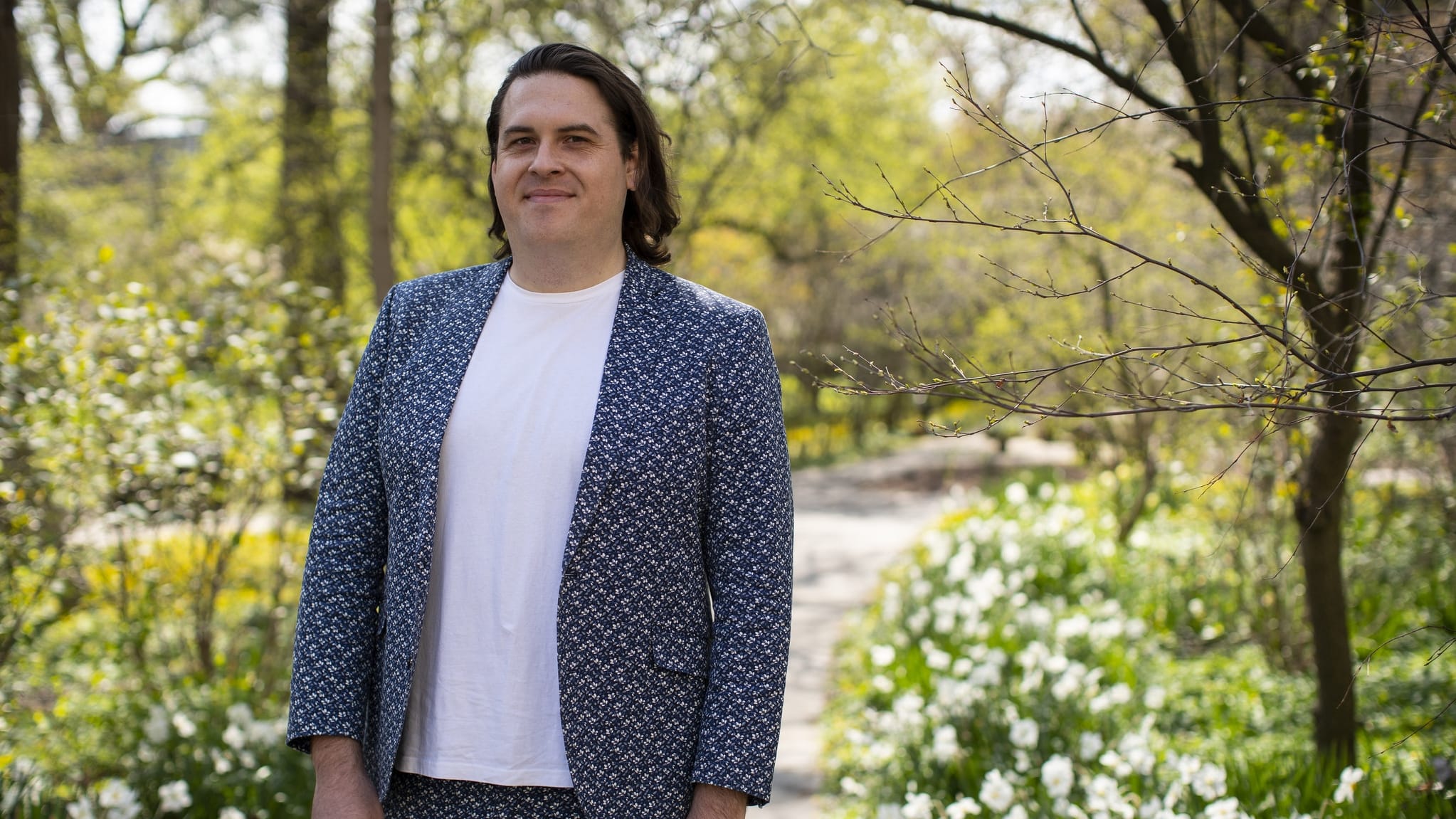
TJ Billard is an expert in media and transgender politics, a leading researcher on anti-trans disinformation, and author of Voices for Transgender Equality: Making Change in the Networked Public Sphere.
Riki Wilchins: The last times we spoke you had a team analyzing a huge number of social media messages about trans people. Can you tell us any more about that and any preliminary findings?
TJ Billard: We have six years of data from the ten most heavily-circulated outlets in the US and UK with all of the political advertisements run on trans topics on Facebook plus public posts made to various platforms. We’ve identified recurrent claims to create a code book of what misinformation is happening which spotlighted about 100 what we’re calling root claims so we can see what proportion is misinformation versus information.
One of the really interesting early insights that’s come out of this process is that a lot of anti-trans misinformation is really hard to nail down. A lot of it is vaguely conspiratorial question-raising, with a lot of plausible deniability baked in. Pro-trans actors like to tell stories about how trans people experience disproportionate levels of discrimination or how trans youth face social exclusion along with numbers for that and an anecdote or quote. This stands in stark contrast to the highly emotional, resonant grandstanding that anti-trans actors make, in which every instance of something they’re attacking is also a diagnosis of an ill in society. So the scale to which we are kind of constructing our arguments in the misinformation battle is really asymmetrical.
RW: You mean they’re making big, large-bore emotion pitches that trigger people’s deep-seated fears and prejudices about social change or social ills, while we’re countering with small-bore factoids, statistics, and anecdotes?
TJB: They’re making emotional claims about all of society and we are making individual claims about trans experience. And these are very disproportionate to one another. A lot of the purchase that anti-trans misinformation gets is because it tells stories that address underlying anxieties that people have about the changing nature of society. It tells a story that, Yeah—society is drifting astray and you don’t need to get used to this trans thing or learn new ways to think about gender, you just need to resist the social corruption that is making you feel out of place and like you don’t understand the rules of the game anymore. Our saying that trans people experience discrimination doesn’t respond to the existential fear people have about—I don’t know what womanhood IS anymore, right? We want people to feel like they can live happy lives and not like we are disrupting the social order. But the fact is, people need to update how they think about gender.
RW: I think we are more profoundly upsetting of the way people think about bodies, sex, and gender than we often admit in public.
TJB: Without being overly sympathetic to anti-trans actors or excusing their feelings, I think if we can understand their genesis point, we can respond more meaningfully. If we can say, Well, people are experiencing this kind of disorientation, the question then becomes how do we construct narratives that alleviate that dread disorientation to help them modernize their views of gender, so they aren’t dependent on misinformation to resolve their emotional angst.
RW: I think you’re right that too often we leave unaddressed the social fears that underlie anti-trans disinformation—what you’ve called “the pervasive ambiguity” people often feel about gender. You’ve called for moving away from just factoid-heavy arguments to “better ways of making meaning.” But I still think the facts are important.
TJB: I don’t think that those two are mutually exclusive. Facts are the bedrock of narratives. And if we look at the anti-trans misinformation, their narratives are built on “facts,” and fabricated numbers, such as the number of trans youth who desist in adulthood. But then they build a compelling story around those facts. So I think we absolutely need to get the information out there. But we also need to use that as the jumping off point for the story we want to tell, as opposed to thinking that fact-based arguments alone will do the job.
RW: It’s kind of like, you know, when someone says to me, You know Riki, you’re ugly and mean and stupid. And I say, That’s not fair, I did well on the IQ tests. I’ve left a lot of other claims unaddressed.
TJB: 100%. Yes.
I think one of the big challenges is: Where do people have the right to be transphobes? We can’t force them to stop or say they don’t have that right. But we can draw lines and say on this side you’re allowed to think and feel however you want, but on the other side are people’s rights to live free lives in the secular society.
It is very concerning to me the extent to which the Christian right has pushed anti-trans misinformation as a smokescreen for their pushing religious views that are not in any way grounded in something rational. I have access to a trove of leaked Christian right emails that we’ve analyzed and you see them go through this kind of epistemic laundering. Because they know that they don’t have a true foundation in science. So they go through a process of identifying negative personal anecdotes and mobilizing around them. Then conservative news agencies begin publishing articles about the alleged “victim” in it; this triggers wider news coverage; and all this gets cited in expert letters and briefs which become legislative testimony and amicus briefs that go into bills and court findings. They’ve produced an entire alternative anti-trans information ecosystem to avoid just coming out and saying Trans people are gross and against God.
RW: I notice you write in some places about disinformation and in others misinformation. For the civilians among us, what’s the distinction?
TJB: So misinformation is false or misleading information based on sincere beliefs, while disinformation is information shared with the deliberate intent to deceive or manipulate public understanding and/or advance political goals. It is a strategic tool used to shore up the weak foundations of a changing status quo—in this case the gender hierarchy.
RW: This brings to mind the increasing suspicion being voiced—I think Paisley Currah has been among those raising it—that the neoliberal belief in more visibility as always a good thing may be naïve. That increased visibility also provides the state with more levers of power to exercise over a disadvantaged minority—which of course we’re seeing with trans kids and trans athletes . Yet I confess, I still come down more on the side of that kind of naïve optimism.
TJB: Visibility as just being visible is not alone going to make change. There’s a lot more nuance to the process. But I do kind of share your optimism at times. I think that visibility is a necessary tool for social and cultural change. If you don’t know what transness is or who trans people are, you can’t build a society that works for them. But the inherent downside is that once you make yourself visible, you can be targeted. Are threats to trans people more immediate and more resourced and absolutely vicious? Yes. But I would say there are lots of ways in which trans life is more possible and achievable for many people now than it was.
RW: Yes, we’re here to stay. I don’t think there’s any way you can shove this gender toothpaste back into the tube.
TJB: Well, we also can’t romanticize the idea that that victory is inevitable, because it’s not inevitable—but it is achievable. They aren’t giving up. But we also won’t and can’t give up either. And we can win.
RW: In Writing in the Margins you develop a new tool for measuring mainstream media delegitimization—including things like deadnaming, mispronouncing, focusing on general status or birth sex—and apply it to 13 of the biggest media outlets. At the time, you found only 294 articles to try it out on. Among your conclusions was, and I quote, “Notably, there is very little coverage of transgenderism in mainstream news.” That was 2016; any plan to reevaluate and re-run that analysis?
TJB: Yeah, that was based on data collected prior to that. How times have changed! I don’t have plans to revisit it because there is too much coverage of trans people to meaningfully analyze without some form of computational assistance. And that is not my dominant skill set.
RW: In your book, Voices for Transgender Equality, you mentioned training nearly a thousand community storytellers and influencers. But you’ve also written that, “Disinformation has become the defining feature of public discourse on transgender rights.” So information-wise, we’re clearly losing. Do we need 10,000 or 100,000 storytellers? Or are we simply outgunned until more mainstream media becomes pro-trans?
TJB: I do think that there is absolutely something to be said for knowing actual trans people and for the power of community storytellers trained to deliver their life experience in clear, resonant ways. But I don’t know that I have a clear answer on your question. I think that’s kind of like you’re asking, I put Miracle Grow in the pot with this plant, so why did my plant still die in this drought? There’s such a bigger structural situation going on above our heads. And while we obviously need broad changes to the way journalists talk about trans issues, I don’t think that alone is going to do it, because the vast majority of people don’t get their information about trans topics from the news media. They aren’t reading what The New York Times says about trans people: they’re seeing what their uncle Bob says on Facebook or they go to an online parenting forum and stumble down an anti-trans rabbit hole. Our information diets are so multifaceted and so robust that we can’t just say that any one stream of influence will get us in front of everyone’s eyeballs, right? No such stream exists anymore.
RW: In your field-founding article, Whither Trans Studies, you argued for a “post disciplinary trans studies” that rejected the current emphasis on high-level, often abstruse gender theorizing. That was four years before Trump took office again and began attacking our ability to live, and you were already calling for moving away from theory to more focus on the material conditions of people’s lives. Were you prescient in your timing, or just lucky?
TJB: That was four years before the second Trump administration, but after the first. And I think it was born out of the frustration that I and my collaborators had that trans research seemingly fell into kind of two discrete camps of health research, and humanistic inquiry, like in English or literature departments. There was a very large middle ground that wasn’t being supported. So our focus was to re-apply academic studies to focus on output with clear and actionable results, that the public and politicians and trans people themselves could use to produce meaningful change.
RW: Do you feel that the journal you launched to fill that gap, the Bulletin of Transgender Studies, has helped reorient scholars towards work that can actually improve trans people’s daily lives, as opposed just being more and better theory?
TJB: I hope so. I do think we have brought people into conversation with each other who were doing this work in isolation, and brought forward more work that can improve someone’s life as a person.
RW: We’ve been talking with TJ Billard, author of Voices for Transgender Equality: Making Change in the Networked Public Sphere from Oxford University Press. Thank you for joining us at Assigned Media today.
TJB: Thank you. It’s always wonderful to chat with you.
Riki Wilchins writes on trans theory and politics at: www.medium.com\@rikiwilchins. Her two last books are: BAD INK: How the NYTimes SOLD OUT Transgender Teens, and Healing the Broken Places: Transgender People Speak Out About Addiction & Recovery. She can be reached at TransTeensMatter@gmail.com.





Really appreciate how you make everyone feel valued and heard in this space 🔥
Question: does “TJ” ID as trans (w/ female pronouns)? [I notice the “Whither” article has a male first name on it]
I’m just curious if this is someone who studies from the outside, or within, or has made a *transition* from the former to the latter! [And not precluding a non-binary ID either, of course]