
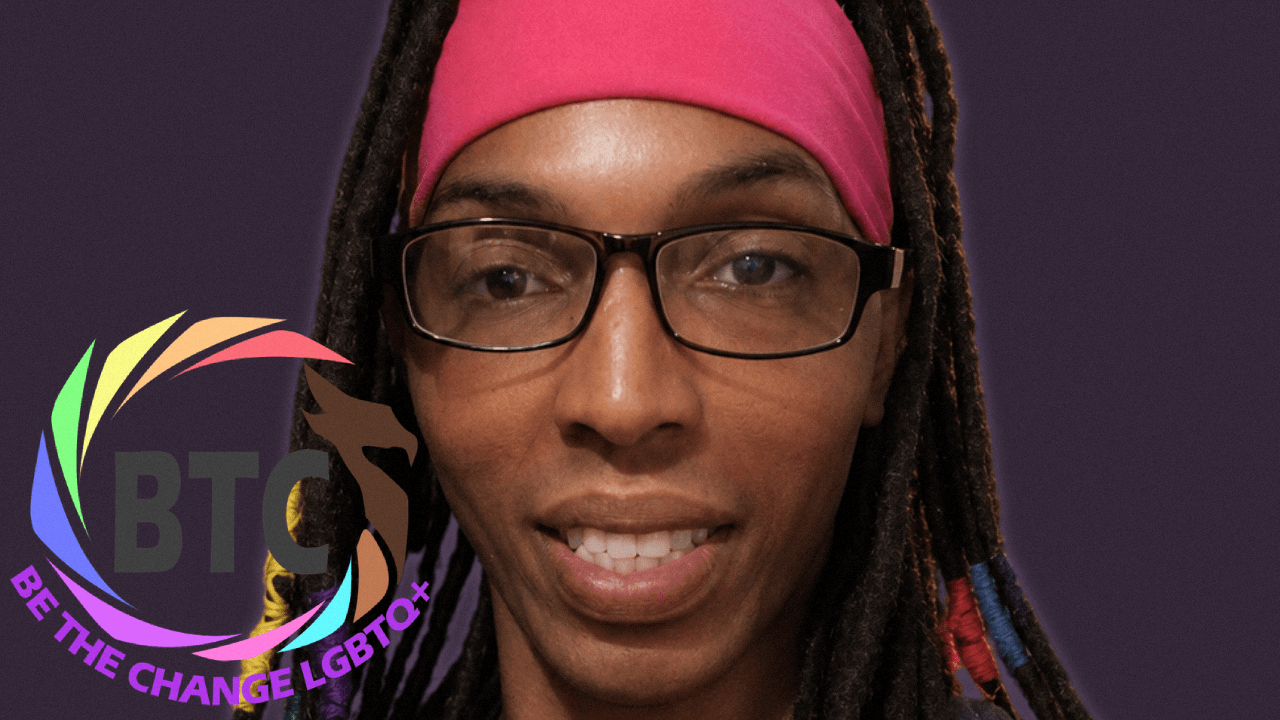
Photo of Tavaria “Varia” Merritt and BTC logo courtesy of Be The Change LGBTQIA Community Inc. Photo illustration by Aly Gibbs
Under the United States injustice system, Black people face arrest and imprisonment in staggering numbers. For Black queer and trans people, finding safety and support while incarcerated is a particular challenge, especially in areas hostile to the LGBTQ+ community.
At the South Central Correctional Facility, a men’s prison in Tennessee, Ms. Tavaria “Varia” Merritt is a courageous Black trans woman lifting her community. Sentenced to prison at 18, she has been incarcerated for over 14 years. In 2014, the same year she came out as gay, Varia founded Be the Change (BTC), a community offering peer support, grievance assistance, creative activities, and other services for incarcerated LGBTQ+ people.
The great work of BTC and Varia, who began her gender transition in 2019, has been covered in Autostraddle, TruthOut, and Filter, among other publications. This year, she’s been nominated for a People’s Choice Award at the Focus Awards for LGBTQ+ people and allies, to be presented in Memphis on August 21.
Assigned Media asked Varia about her experiences and the BTC community. (The interview has been lightly edited for length and clarity.)
Assigned Media: What are the most urgent needs and wishes expressed by members of Be the Change?
Varia Merritt: The most urgent are safety, consistent access to our programs, educational materials, books, hygiene products, gender-affirming care, mental-health support, and fair treatment from prison officials. Our members also want to feel connected to people outside prison and to know that they have not been forgotten.
We need supporters, organizations, churches, and advocates willing to donate resources, establish correspondence with incarcerated LGBTQIA people, support our Community Classes, and speak up when our programs or basic rights are denied. Our members wish for a safe and permanent space where BTC can continue meeting, learning, healing, and building community without unnecessary interruptions.
AM: What are some of your favorite BTC activities to participate in?
VM: Our BTC Family Fun Day Kickball Game and our Community Classes. Family Fun Day gives us an opportunity to laugh, exercise, build teamwork, and experience a sense of family in an environment that can often feel isolating.
I also love participating in our Community Classes because they allow members to learn, speak openly, strengthen their communication skills, and help one another grow. Whether we are discussing relationships, anger management, surviving incarceration, education, leadership, or substance-abuse recovery, I enjoy watching members recognize their own value and potential.
AM: Have you found Black folks in prison to be more or less receptive of BTC than incarcerated people of other racial backgrounds? How has being Black affected your relationships with other incarcerated people and prison officials?
VM: The response has varied more by the individual than by race. I have received meaningful support from Black incarcerated people and from people of other racial backgrounds. I have also encountered misunderstanding, prejudice and resistance from different groups. Some Black people immediately understand why a community such as BTC is necessary, while others may struggle with accepting LGBTQIA and transgender identities because of religious beliefs, cultural expectations or a lack of exposure.
As a Black transgender woman, I live at the intersection of racism, transphobia, and the stigma of incarceration. At times, I have felt that I must work twice as hard to be heard, respected, or taken seriously. Some incarcerated people and prison officials see my identity before they see my leadership, humanity, and accomplishments. However, being Black has also connected me to a history of resilience, faith, community organizing, and resistance. It has strengthened my commitment to building relationships across racial backgrounds while remaining honest about the discrimination Black and transgender people continue to experience.
AM: You have been incarcerated during the administrations of three US presidents (Obama, Trump, and Biden). Have you found that prison conditions changed noticeably with the changes in the federal government?
VM: Because I am confined in a Tennessee state prison, changes in presidential administrations have not always produced immediate or obvious changes in my daily conditions. Most of what directly affects us is controlled by state laws, the Tennessee Department of Correction, facility leadership, and private prison management. [Note: South Central is managed by CoreCivic, a firm that donated $500,000 to the Trump-Vance inaugural committee.]
However, changes in federal leadership do affect the national conversation surrounding LGBTQIA rights, transgender healthcare, criminal justice reform, and the dignity of incarcerated people. When national leaders support equality and reform, incarcerated LGBTQIA people may feel greater hope and protection. When political rhetoric targets transgender people or treats incarcerated people as undeserving of basic dignity, that attitude can influence institutional culture. Presidents change, but many of the conditions inside prison remain the same unless laws, policies, accountability, and the attitudes of those running the institutions also change.
AM: As a former youth pastor, what advice do you have for church leaders on how they can best affirm and support trans people?
Begin with love, listening and humility. Do not make transgender people feel that they must choose between their faith and their identity. Learn directly from transgender people instead of only talking about us from the pulpit. Use our correct names and pronouns, welcome us into leadership and worship, and challenge discrimination within your congregations.
Churches should also provide practical support by visiting and corresponding with incarcerated transgender people, assisting with reentry, supporting affirming housing and healthcare, and partnering with organizations led by transgender people. Jesus consistently reached people whom society rejected. The church should be a place of refuge, healing, and belonging—not another place where transgender people are judged, humiliated, or pushed away.
AM: How do you feel about being nominated for a Focus Award?
VM: Being nominated is an incredible honor. I am grateful, humbled, and emotional because this recognition reaches beyond me personally. It represents the members of Be The Change, the incarcerated LGBTQIA community, and every person whose gifts and humanity have been overlooked because they are behind prison walls.
To be recognized while incarcerated shows that purpose cannot be confined. It tells our members that their work matters and that people outside these walls can see what we are building. Whether or not I receive the award, the nomination has already made history for our community and given greater visibility to incarcerated LGBTQIA people who are too often forgotten.
AM: Anything else you’d like to add?
VM: I want people to understand that incarcerated LGBTQIA individuals are still human beings with dreams, talents, families, and the ability to create positive change. Be The Change was founded inside prison because we needed safety, unity, education, leadership, and a place where we could belong. Since 2014, we have continued that mission despite limited resources and many obstacles.
BTC has become the first openly LGBTQIA community established within Tennessee’s prison system, and our work proves that leadership and transformation can emerge from places society often ignores. I ask people outside prison to learn about our organization, share our story, support our programs, correspond with our members, and use their voices to advocate for fair and humane treatment.
My incarceration does not erase my humanity, my womanhood, or my purpose. I want my life and BTC’s work to remind others that no matter where you are, you can still be the change you want to see.
Pax Ahimsa Gethen (they/them) is a queer Black trans writer and editor. They live in San Francisco with their spouse Ziggy.




It is interesting to read a practising Christian’s thoughts on her faith and its relevance to being LGBTQ+ while incarcerated. I’m a former Christian and trans and, while I no longer subscribe to a religious belief, I can still admire the teachings of Jesus in the Gospels and how they lift up the poor, the dispossessed and the vulnerable, teachings so subversive that the Jewish religious authorities of his day responded by persuading the Roman occupiers of Palestine to arrest and execute him as an example to fear. Those teachings are rarely followed in many Christian churches. I wonder if any other religious faith offers anything close to such subversive messages under capitalism. I doubt it. Most seem focused on attaining political power and oppressing us.